
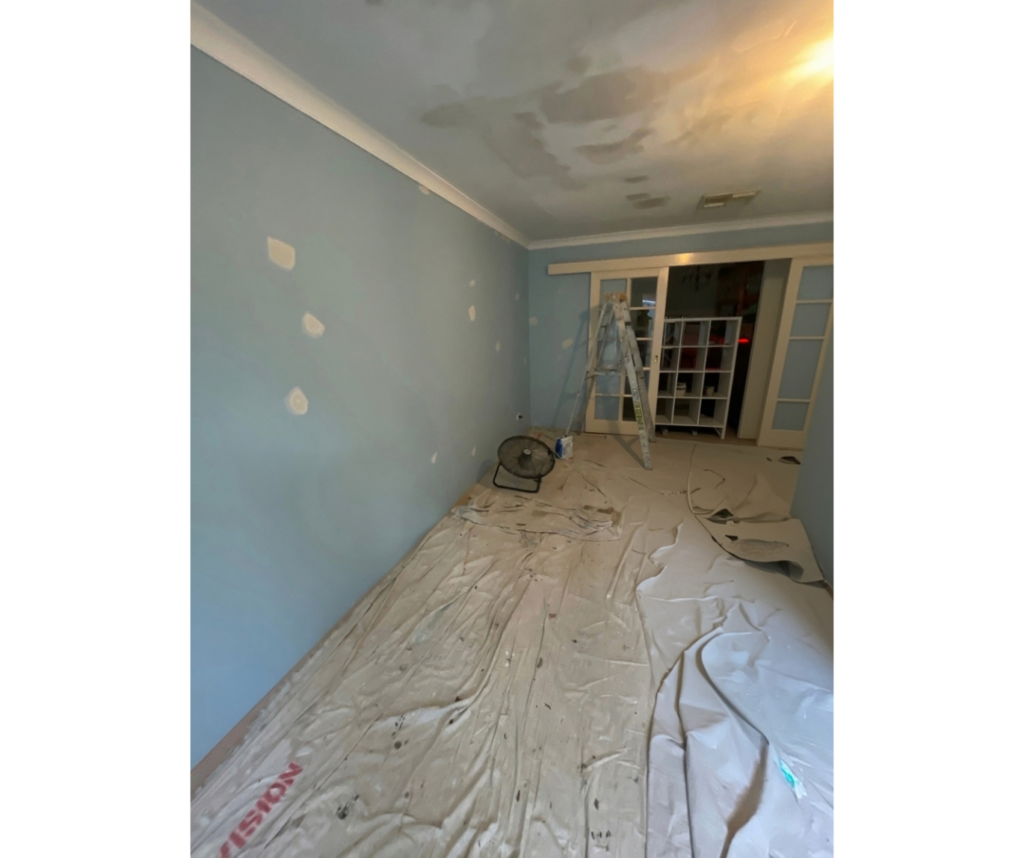
What Repairs Should Be Done Before Repainting a Property?
One of the most important parts of a repaint happens before the new colour goes onto the wall.
If an existing surface has cracks, loose coatings, damaged render or deterioration, those issues should be assessed before painting begins.
Some items form part of normal painting preparation. Others may need repairs by the painter or, depending on the problem, attention from another trade.
Understanding the difference helps property owners develop a more realistic scope before repainting.
Why can’t damaged surfaces simply be painted over?
Paint follows the surface underneath it.
If the existing coating is loose, applying fresh paint over the top does not restore the adhesion of the original layer.
Similarly, filling over a problem without understanding what caused it may only address its appearance.
The aim of preparation is to create a suitable surface for the new coating.
That can involve more work than simply washing the wall and applying paint.
Peeling and flaking coatings
Loose coatings should be identified before repainting.
The affected material may need to be removed back to a stable edge before further preparation takes place.
Once loose material has been removed, the exposed area can be assessed to determine whether additional preparation or priming is required.
The amount of work varies considerably from one property to another.
A small isolated area is very different from an exterior where large sections of the previous coating system have failed.
This is why preparation should be inspected and allowed for in the quotation.
Cracks in rendered walls
Cracking is common enough that many property owners assume it can simply be filled and painted.
Some cracks may be suitable for normal preparation and filling. Others may require further investigation.
A painter can identify visible cracking, but painting should not be presented as a solution for structural movement or other building defects.
Where a crack appears significant or repeatedly returns, it may need assessment outside the normal painting scope.
Damaged render
Rendered walls can suffer chips, impact damage and deteriorated sections.
These areas may need to be repaired before painting so the finished surface is consistent.
The quotation should make clear whether render repairs are included and the extent of the repairs that have been allowed for.
This becomes particularly important on commercial and strata-style properties where repair quantities can affect the overall project scope.
Water staining and moisture-related concerns
Discolouration can sometimes indicate a problem beyond the paint itself.
If a wall repeatedly develops moisture staining, the source should be investigated before the area is repainted.
Painting over a mark may temporarily improve its appearance, but it does not correct a leaking roof, plumbing issue or other source of moisture.
The underlying problem should be dealt with first.
Timber deterioration
Exterior timber should be checked before repainting.
Peeling paint may expose sections of timber to weathering. Joints, corners, window frames and other details can also deteriorate over time.
Normal preparation may include sanding and removal of loose coatings.
However, damaged or decayed timber may require repair or replacement before painting proceeds.
The painter and client should be clear about where the painting scope ends and another trade may be required.
Rust and metal surfaces
Metal components can develop rust where protective coatings have broken down.
The appropriate preparation depends on the condition and type of metal.
A repainting scope may include preparation of affected metal areas, but heavily deteriorated components could require repair or replacement before painting.
Again, the key is to identify the condition before the quotation is finalised.
Previous patching and poor repairs
Older properties often contain evidence of previous repairs.
Some patches may be sound. Others can be uneven, loose or visually noticeable through the existing paint.
During preparation, these areas should be inspected and addressed where necessary.
This is particularly important when a smoother interior finish is expected.
What is normally considered painting preparation?
The exact scope varies by project, but painting preparation may include work such as:
- cleaning
- sanding
- scraping loose coatings
- minor filling
- patching
- preparing repaired areas
- priming suitable surfaces
- masking and protection.
Nu-Vision’s documented equipment includes pressure washers, dustless sanding equipment and surface protection equipment, supporting different preparation methods depending on the project.
What may require another trade?
Painting contractors should not pretend every building problem can be solved with paint.
Depending on the property, issues outside the normal painting scope might include substantial carpentry repairs, significant water ingress, structural movement or other building defects.
The right approach is to identify these issues before work progresses.
This allows the owner to organise the required repairs rather than discovering them after painting has started.
Ask for preparation and repairs to be listed separately
When reviewing a quotation, look for clarity around preparation.
If repairs are required, ask whether they are:
- included
- allowed for provisionally
- excluded
- subject to further assessment.
This makes it much easier to understand what you are comparing between quotations.
Preparation should suit the actual property
There is no useful one-size-fits-all preparation schedule.
A well-maintained interior is very different from an exterior with widespread failed coatings.
The preparation scope should respond to the condition of the property rather than being copied from one job to another.
A proper inspection before repainting is therefore one of the most useful steps a property owner can take.
5. Internal links
- Preparation & Repairs service page
- Why Surface Preparation Matters
- Paint Surface Preparation: What Does It Involve?
- Relevant preparation-heavy case study
- Contact page
Not sure what needs repairing before you repaint?
Nu-Vision Painting can inspect the existing surfaces and identify the preparation and painting work required before providing a detailed quotation.