
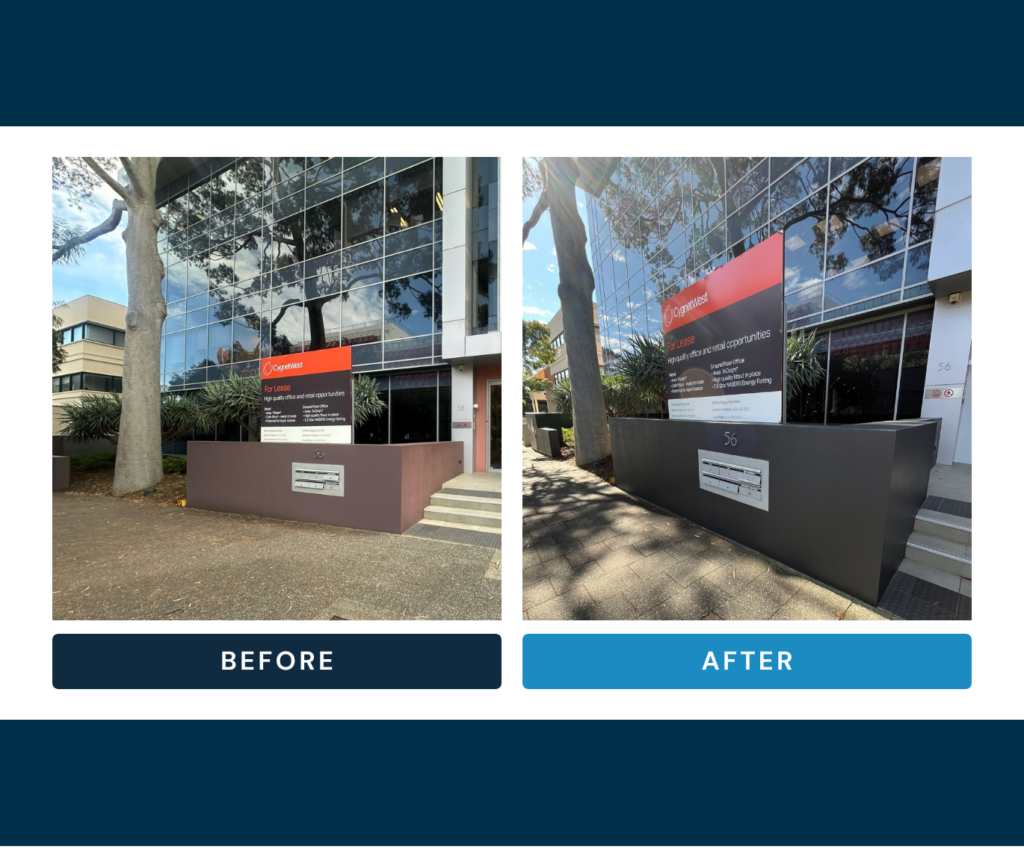
Touch-Up or Full Repaint: Which Do You Need?
A scuffed wall or small damaged area does not automatically mean an entire home or commercial building needs repainting.
In some situations, local touch-up work can be practical.
In others, the existing paint has aged or deteriorated to the point where isolated repairs are unlikely to give a consistent result.
So how do you decide between touch-up painting or a full repaint?
Start with the size of the affected area
One small mark is very different from widespread deterioration.
If only a limited section has been damaged and the surrounding coating remains in good condition, local maintenance may be worth considering.
If marks, repairs or wear are appearing across several areas, repainting a larger section may produce a more consistent outcome.
Consider the age and condition of the existing coating
Touch-ups are easier when the surrounding paint remains in sound condition.
As coatings age, their appearance can change.
This means newly applied paint may look different even if the colour reference is the same.
The surface condition matters as much as the colour.
If the existing coating is peeling or poorly adhered, applying a small amount of fresh paint does not address the underlying problem.
Colour matching can affect the decision
Homeowners often assume that using the original paint colour will make a repair invisible.
That is not always the case.
Light exposure, wear and previous cleaning can alter the appearance of painted surfaces over time.
A localised repair may therefore remain visible from some angles.
Where appearance is particularly important, repainting the full wall or defined area can sometimes provide a more consistent finish.
Touch-ups do not replace preparation
Even a small repair needs suitable preparation.
Damaged areas may need sanding, filling or priming before finish paint is applied.
The fact that the area is small does not mean the preparation should be skipped.
Look for coating failure
Touch-ups are generally intended for local damage or wear.
They are not a solution for widespread peeling, flaking or unstable coatings.
If the underlying coating is failing, the affected surface needs to be assessed properly.
That may lead to a larger preparation and repainting scope.
Consider the whole area rather than individual marks
On an interior wall, several small patches can sometimes become more noticeable than repainting the complete wall.
The same applies to doors, corridors and other defined surfaces.
Rather than looking at each mark separately, consider how the repaired area will look as a whole.
High-traffic areas may need a maintenance plan
Commercial properties can develop repeated wear in the same locations.
Entrances, corridors and doors may require attention sooner than low-use spaces.
Rather than repeatedly reacting to individual marks, property managers may find it useful to identify these areas as part of planned maintenance.
Exterior touch-ups require additional consideration
Exterior surfaces are exposed to weather and light.
This can make colour and coating differences more obvious.
If one elevation has deteriorated significantly while others remain sound, an inspection can help determine whether selected repainting is practical.
There is no universal answer
The best approach depends on:
- condition
- size of the affected area
- colour consistency
- surface type
- expected appearance
- cause of the damage.
A professional inspection can help determine whether local maintenance is practical or whether a broader repaint will provide a better result.
Not sure whether you need touch-ups or a larger repaint?
Nu-Vision Painting can assess the existing coatings and help you understand the work required before preparing a quotation.